A merchant can display prices in the customer’s own currency and still present a checkout that feels distinctly foreign.
Payment habits do not become uniform when businesses cross borders. Cards are central to ecommerce in many countries, but they are far from the only established way to pay. Depending on the market, customers may expect to use their bank, a domestic payment service, an e-wallet or a mobile payment app.
For an international merchant, supporting a market properly means understanding those preferences rather than assuming that card acceptance and local currency are enough.
Payment habits remain local
Customers tend to trust payment methods they recognise. They know how the process works, which details they will need and what confirmation to expect.
That familiarity matters at checkout. A customer who cannot find a normal way to pay may choose an unfamiliar option, but they may also hesitate or leave. The merchant has already done the expensive work of attracting that customer; the cashier should not introduce avoidable uncertainty at the final stage.
The preferred method can vary sharply between countries. In one market, cards may provide ample coverage. In another, a bank-based method, domestic payment service or local e-wallet may be part of the standard online buying experience.
A payment setup that performs well in one country cannot automatically be expected to work equally well elsewhere.
APM is a broad term
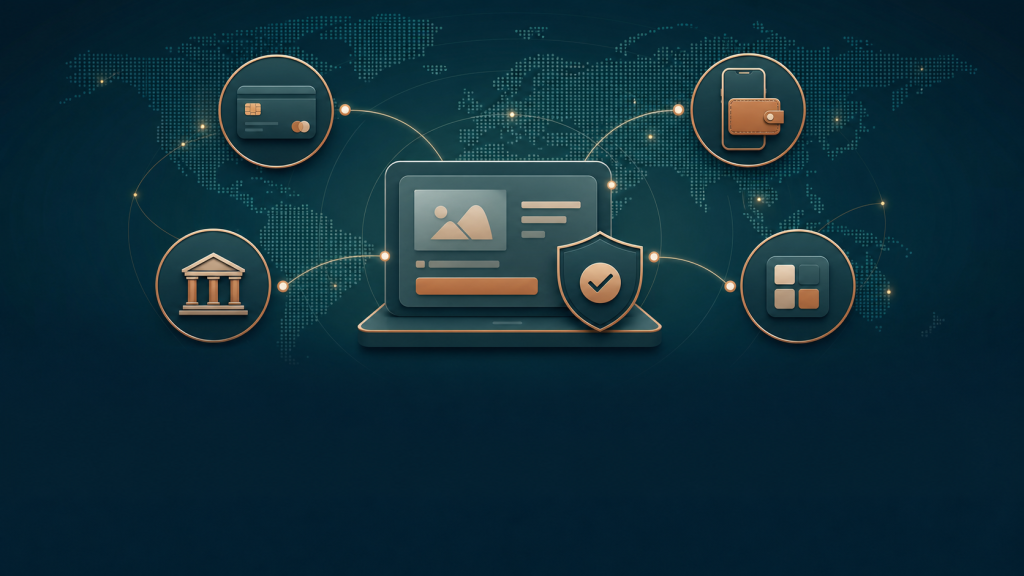
The term “alternative payment method”, usually shortened to APM, covers almost anything outside a conventional card transaction. It can refer to e-wallets, Open Banking payments, mobile payment services, domestic bank-payment methods, vouchers and buy-now-pay-later products.
These methods have little in common beyond not being traditional card payments.
Some are designed for frequent use and stored balances. Others allow customers to authorise individual payments through their banks. Some operate across many countries, while others owe their value to being firmly established in one particular market.
Saying that a merchant accepts APMs therefore tells us very little about its actual coverage. The important question is whether it accepts the methods its customers are likely to use.
Bank payments now cover several different journeys
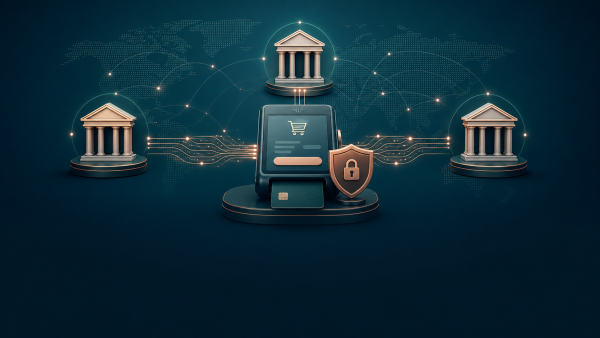
A traditional bank transfer usually requires the customer to leave the checkout, open their banking service and enter the payment details manually. It can still be useful, particularly for certain business payments or higher transaction values, but it is not the only way to pay directly from a bank account.
Open Banking and other pay-by-bank services can provide a more connected checkout journey. The customer selects the option, moves securely to their bank or banking app and approves a payment whose details have already been populated. Once authorised, the customer returns to the merchant.
Outside Open Banking frameworks, local account-to-account and instant-payment systems may provide a similar customer experience through domestic banking infrastructure.
These services can reduce manual entry and make bank payments a practical checkout option. They should not, however, be treated as interchangeable. Geographic reach, payment confirmation, refunds, settlement and the customer journey vary between products and markets.
Choosing the right mix for the cashier
Adding more methods can improve payment coverage, but there is little value in filling the cashier with options that customers rarely use.
The methods displayed should reflect the people most likely to reach the checkout. A merchant serving several countries may therefore need a different mix for each market rather than one long, universal list.
Where the technology supports it, options can be prioritised according to the customer’s country, currency or previous behaviour. A familiar local method can appear prominently without making the cashier harder to navigate for everyone else.
The type of transaction matters as well. A method suited to a one-off purchase may not support recurring payments. A convenient deposit route may not provide the withdrawal journey required by a gaming operator, trading platform or another business that returns funds to customers.
Refunds, settlement currencies, reporting and commercial terms all need to work alongside the checkout experience.
Existing coverage is worth reviewing
Local payment methods are often discussed when a merchant enters a new country, but expansion is not the only reason to review the payment mix.
A business may already operate in a market while relying heavily on cards or a single provider. Adding an appropriate bank-payment method, e-wallet or further acquiring route could improve coverage, provide another route through the cashier or offer a more attractive commercial arrangement.
The existing setup does not necessarily need to be replaced. Payment coverage can be strengthened selectively where there is a genuine commercial or customer need.
That may mean addressing a country where customers prefer a method that is not currently available. It could involve improving the route used for a particular currency, strengthening the withdrawal journey or comparing an established option with newer or more commercially competitive alternatives.
Start with the customer and the market
Payment methods should not be selected simply because they appear on a provider’s product list.
The decision begins with the countries being served, the customers within them and the transactions they need to complete. Are payments one-off or repeated? Will funds also need to be returned? Which currencies matter? How should settlement work? Are there sector or licensing requirements that affect provider availability?
Once those points are understood, it becomes easier to identify which payment routes deserve a place in the cashier.
Cards, local payment methods, bank payments and e-wallets are not competing answers to every payment requirement. Each can serve a different part of the journey. The value lies in using them where they fit the market, the transaction and the customer.
Review your payment method coverage
Planning to enter another market or improve an existing cashier? We can discuss your current payment coverage and the additional routes that may be commercially relevant.
Still assessing the market? Subscribe for Merchant News, practical payment coverage and early updates on newly available products and providers.