Accepting card payments can look simple. The customer enters their details, completes any security checks and receives confirmation that the deposit has been made.
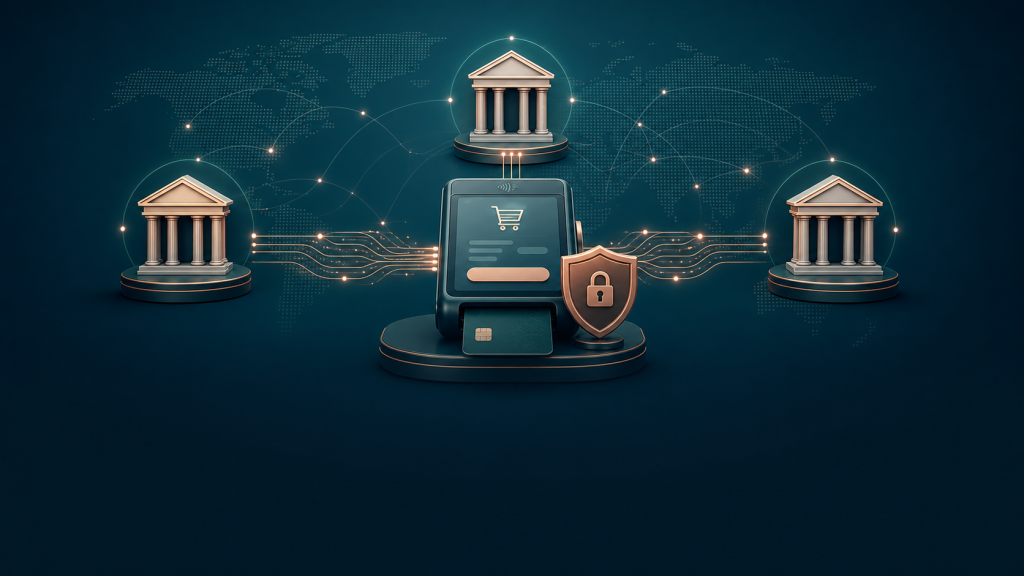
For the merchant, that short journey relies on two things working together. The acquiring arrangement allows the business to accept card transactions and receive settlement. The payment gateway carries those transactions securely between the cashier and the providers responsible for processing them.
Providers often combine these services, but they solve different parts of the same problem. An iGaming operator or trading platform needs an acquiring route that supports its business and gateway technology capable of using that route effectively.
Acquiring determines where card payments can be accepted
The acquirer provides the commercial arrangement through which the merchant accepts card payments. It connects the business to the card-payment system and settles approved transactions under the terms agreed with the merchant.
That arrangement is specific to the business being supported. The acquirer considers the merchant’s activity, licences, customer locations, currencies, transaction values and expected volumes. It also determines the countries and types of card traffic it is prepared to accept.
For an iGaming operator, this could mean supporting player deposits across several licensed markets. A trading platform may need to accept funding transactions from customers in different regions and currencies. The fact that both businesses accept cards does not make their acquiring requirements identical.
Coverage can also vary between acquirers. One may be well placed to support a particular region while another offers a stronger arrangement elsewhere. Settlement currencies, payment terms and pricing can differ too.
This is why acquiring cannot be judged solely by the card brands shown at checkout. Visa and Mastercard acceptance says little about which customers can use those cards, how the transactions will be handled or whether the arrangement suits the merchant commercially.
The right acquiring route gives the business usable coverage. It supports the activity being conducted, serves the relevant customers and settles funds in a way that works for the merchant.
The gateway puts that acquiring to work
The gateway sits between the merchant’s cashier and the processing connections behind it.
It receives the card details securely, sends the payment for authorisation, supports the required authentication and returns the result. It also gives the merchant the technical connection needed to use its acquiring arrangement.
The quality of the gateway affects the customer’s experience. A clear checkout and well-handled authentication make it easier to complete a legitimate payment. Confusing redirects, unnecessary steps or poor error messages can cause customers to abandon the process.
The merchant’s payments team sees another side of the gateway. Reporting and transaction information can help it understand approvals, declines and the performance of different payment routes. Useful controls also make it easier to manage how card payments move through the setup.
Some gateways connect to one acquirer. Others can connect to several. A multi-acquirer gateway can allow the merchant to use different routes for particular markets, currencies or types of card traffic without creating a separate checkout for every provider.
Where the gateway supports it, routing can direct transactions to the most appropriate available connection. More advanced arrangements may also provide another route when the first is unavailable or unable to process the transaction. The exact capabilities depend on the gateway and the acquiring agreements connected to it.
The strongest arrangement comes from the combination
Good acquiring with a poor gateway can leave the merchant with suitable coverage but a weak checkout. A capable gateway connected to the wrong acquiring route can provide impressive technology without access to the markets the business needs.
The two need to be considered together.
An operator entering another country may require a new acquiring route to cover customers there. If its gateway already supports that acquirer, the route may be added without rebuilding the cashier. If it does not, the merchant may need another integration or a gateway with broader connectivity.
The same applies when reviewing commercial terms. Another acquirer may offer a more suitable arrangement for part of the merchant’s card traffic, but the value depends on whether that route can be incorporated into the payment setup effectively.
Using more than one acquirer is not automatically the right answer. Each connection needs a clear commercial or operational purpose. For an international merchant, however, several well-chosen routes can provide broader coverage and reduce the dependence placed on a single arrangement.
The gateway brings those connections into the cashier. The acquiring relationships provide the coverage and commercial basis on which the transactions are accepted. Neither replaces the other.
Cards remain part of a broader cashier
Customers may also use e-wallets, bank payments, Open Banking or local payment methods. Each can serve a different market or part of the customer journey.
That wider choice does not make card acquiring less important. Cards remain familiar to many customers and can provide a direct route into the merchant’s cashier. The task is to make that route work properly alongside the other methods available.
For iGaming operators and trading platforms, effective card acceptance starts with acquiring that fits the business and a gateway capable of making the most of it.
Reviewing your card-payment setup?
Tell us about the markets, currencies and payment routes your business needs to support.
Receive Merchant News and hear about relevant payment products, providers and market opportunities as they develop.